Grinding Sounds Mean You've Already Waited Too Long
Brake Inspection and Replacement in Plainwell
You press the brake pedal while driving through Plainwell and hear a high-pitched squeal or a grinding sound from the wheels. The pedal feels softer than it used to, or the car takes longer to stop than it should. Lynch Tire and Service inspects brake pads, rotors, and braking components for wear, then replaces parts that no longer provide safe stopping performance.
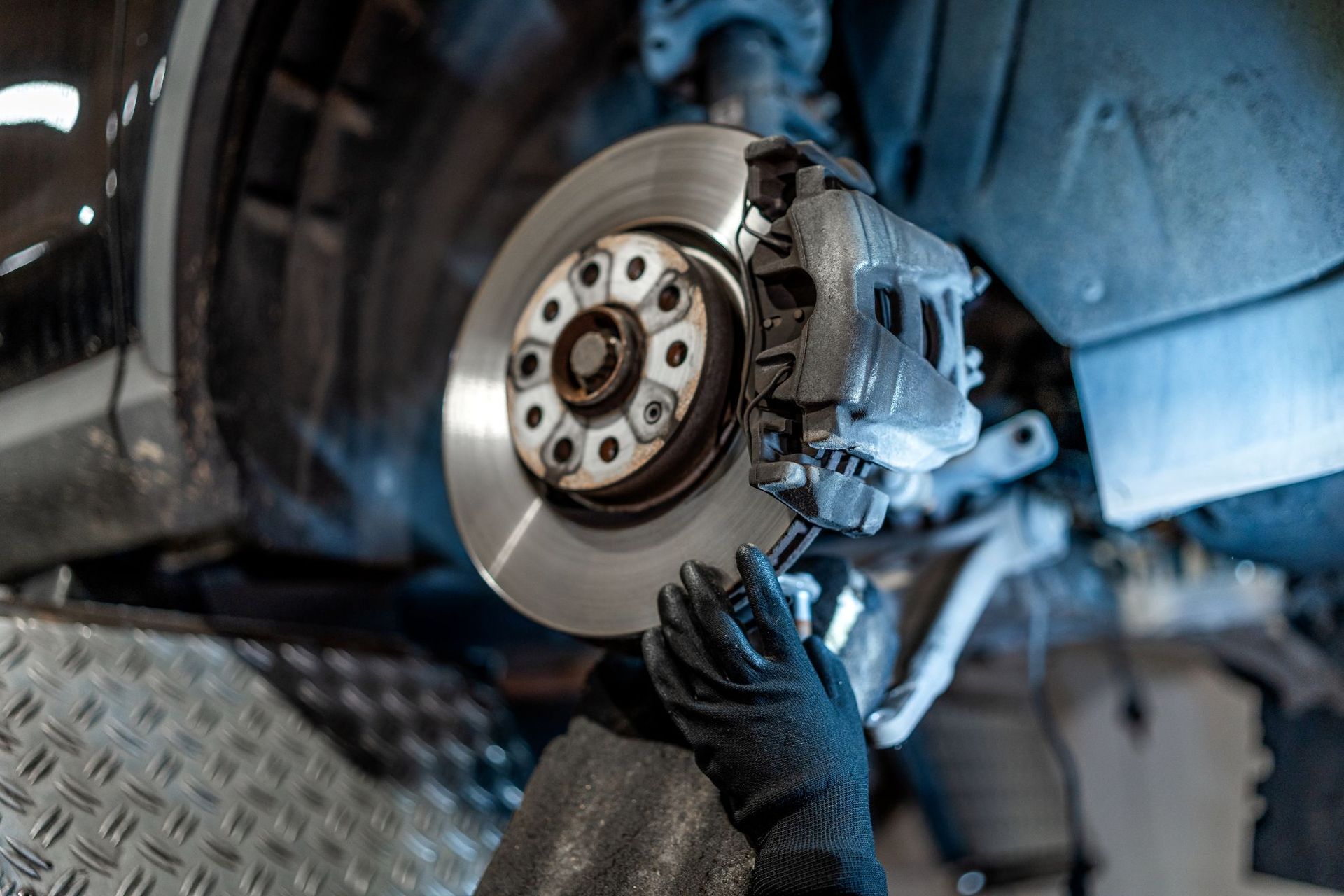
Brake inspection includes measuring pad thickness, checking rotor surfaces for scoring or warping, and testing brake fluid condition. Replacement involves removing worn pads and damaged rotors, installing new parts, and confirming the braking system responds correctly. This service addresses squeaking, grinding, or reduced braking response before unsafe conditions develop on rural roads and highway routes around Plainwell.
If your brakes feel different or make noise when you stop, contact Lynch Tire and Service in Plainwell to schedule an inspection.
What Gets Checked and What Gets Replaced
When your vehicle arrives at the shop in Plainwell, each wheel is removed so the brake pads, rotors, calipers, and hardware can be inspected. Pad thickness is measured with a gauge. Rotors are checked for grooves, heat cracks, and uneven surfaces. If pads are worn below safe limits or rotors are damaged, replacement parts are installed.
After new pads and rotors are installed, your brakes stop the vehicle smoothly and quietly. The pedal feels firm and responsive. You won't hear squealing, grinding, or scraping sounds when you press the brakes. Stopping distances return to normal, and the vehicle doesn't pull to one side during braking.
Brake inspection also includes checking brake lines, fluid levels, and caliper operation. If fluid is contaminated or low, it's topped off or replaced. Seized calipers or leaking lines require separate repairs. This service focuses on pads and rotors, which wear out from normal driving and need replacement more often than other brake system parts.
You'll Know When Something Doesn't Feel Right
Drivers in Plainwell often ask the same questions when they notice changes in how their brakes sound or feel.
Brakes wear out gradually, but the warning signs are clear once you know what to listen for. If you're driving in Plainwell and your brakes don't sound or feel right, call Lynch Tire and Service at (269) 501-0920.